A very large black raven with a broad white nape and thick white-tipped bill, wandering from the community up to the peaks.
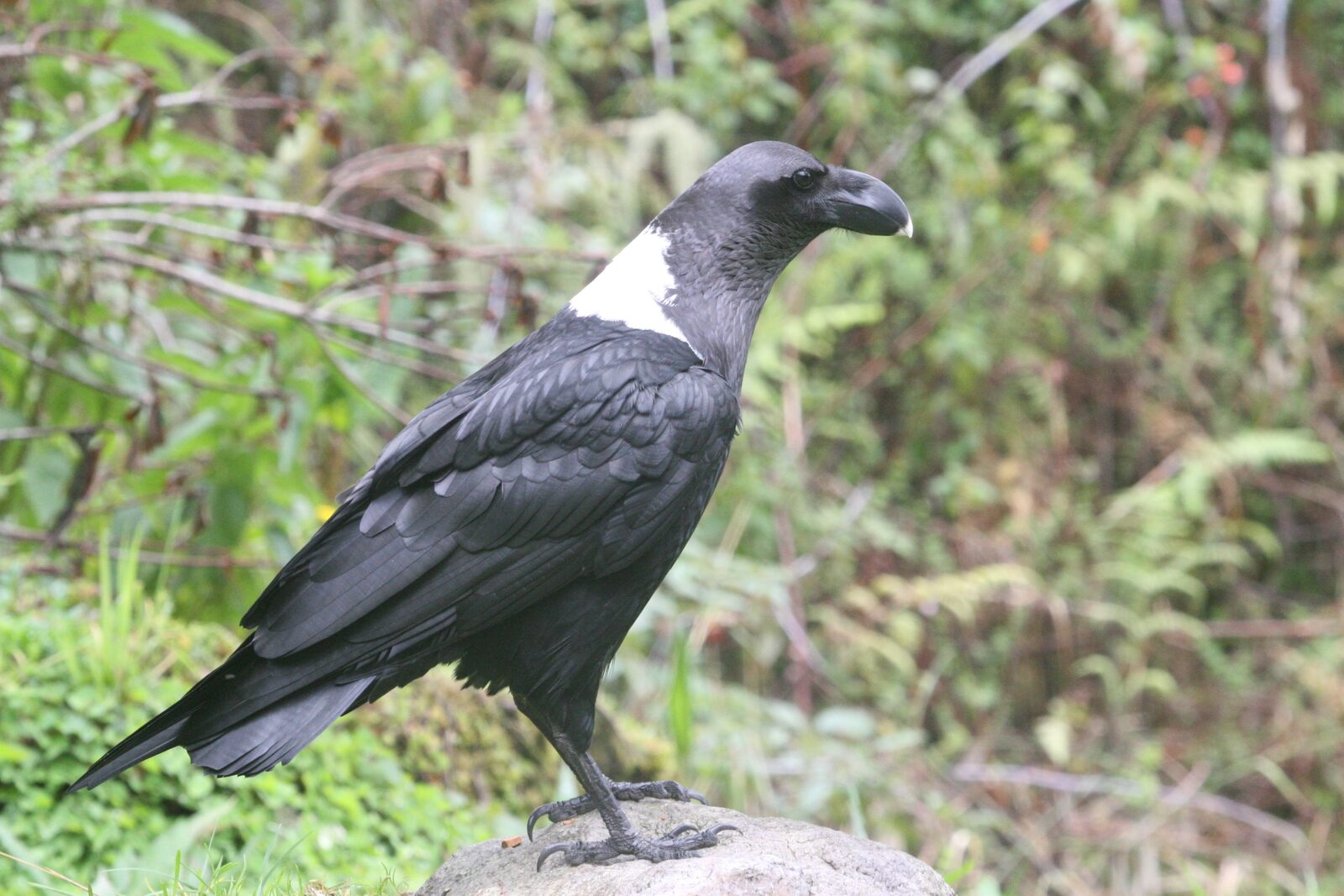
Also called the White-necked Raven — a very large black raven (browner on the head) with a broad white collar at the base of the hindneck and a thick, white-tipped black bill. The immature is duller than the adult.
A rather high-pitched "kerrrrrh", with a more purring, tremulous quality than other ravens and crows.
Pairs and small flocks favour cliffs and mountains but wander widely — down to 400 m in East Kenya and as high as 5,800 m on Kilimanjaro. In our area this raven comes down to 1,400 m along the Park boundaries (seen in dustbins in the community) and goes as high as 4,800 m in the Rwenzori.
Feeds on insects, small reptiles, peanuts and human food, foraging openly in back yards and gardens. It also scavenges carrion and eats fruit.
Nests on rocks or old buildings, making a nest of dead branches; lays 3 eggs incubated ~18–20 days by the female, fed by the male. Both parents feed the young for 5–6 weeks after hatching.
Generally non-migratory. Within the community neighbouring the Park it carries no particular folklore beyond being a taboo or totem to some clans.
Our guides know where to find it along the Kilembe Trail. Let us build a trek around the birds you most want to see.