
An Albertine Rift endemic tit with a bold black breast-stripe, working the moss-covered dead wood near Kihalo.
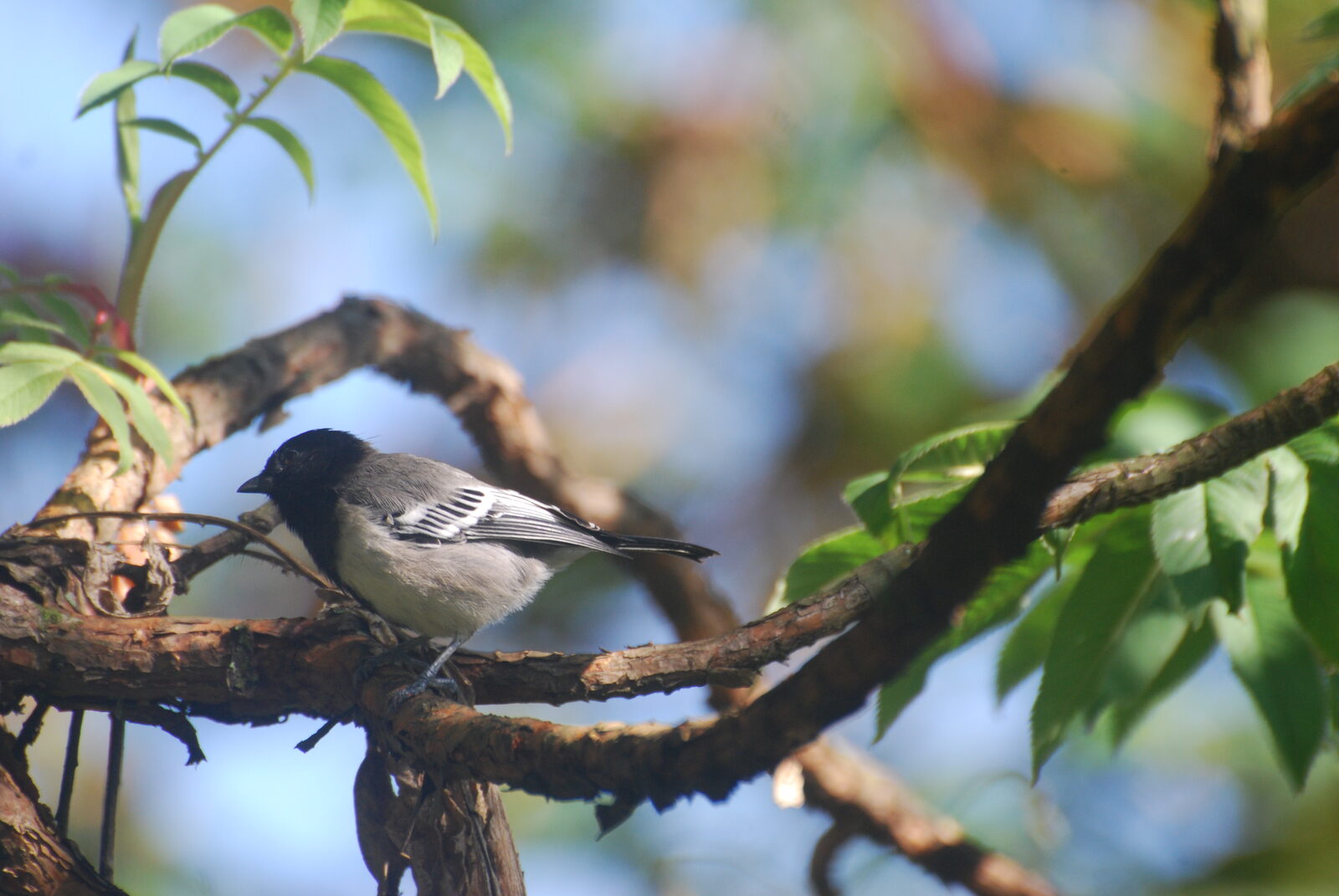
A dark grey, black and white tit, the black of the head extending as a broad vertical stripe down the centre of the breast. Grey and black above with white wing-bars and white edges to the tail. The immature is browner, washed yellowish on the flanks.
Shorter "chuurrs" and a rhythmical "ch-ch-ti-ti…" song, with obviously tit-like but rather soft, muffled calls.
An Albertine Rift montane-forest endemic from 1,800 m to 3,400 m, common in the middle level and canopy. In our area it is seen midway between Samalela and Kihalo in open woodland on moss- and lichen-covered dead wood at 3,400–3,463 m, and at Kihalo Camp on tall trees covered in moss epiphytes.
Mostly insectivorous in the dry season, taking a wider range of food in the rains.
A cavity nester — it uses tree holes for its nest, where the female lays about 12 eggs and incubates alone, though both parents raise the chicks.
Not a migrant, but can move vertically below its usual habitat depending on weather and food. Uncommon in the community; seen in the forest at its feeding sites, often on open moss-covered branches.
Our guides know where to find it along the Kilembe Trail. Let us build a trek around the birds you most want to see.