
A ground-loving chat with a distinctive brick-red throat, often following ant columns on the forest floor.
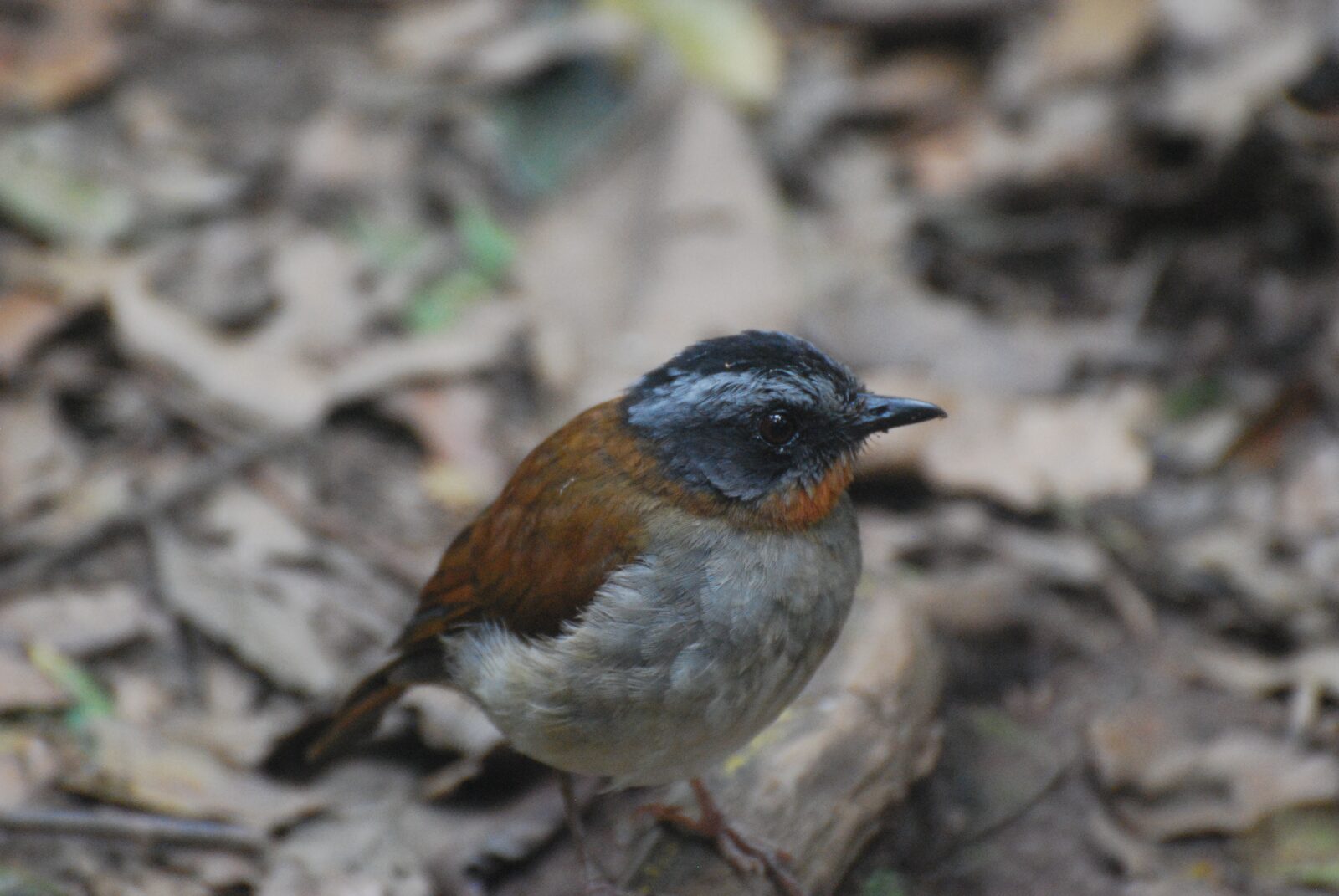
The head is black with a long, broad grey supercilium extending to the nape, and a distinctive brick-red throat. Otherwise chestnut-brown above and dull greyish-white below. The juvenile is dark above and on the breast with many rufous spots and streaks.
A noisy, monotonous songster — mostly repeated piping notes, or rising and falling slurs, apparently delivered at random.
Endemic to the highland forests along the Albertine Rift from 1,500 m up to 3,000 m. In our area it is seen from 1,780 m to 3,400 m — from the suspended bridge toward the riverside trail up to Samalela, including the bamboo zone.
Mostly seen where ants are on the move, hunting the ants' eggs and the insects trying to escape them.
Breeds mostly in the dry season (May to late August, sometimes January–March), nesting in the undergrowth a few centimetres from the ground.
Moves in short hops on the ground, following ant tracks, mostly in cleared areas along trails or in openings in the forest floor. Not a migrant, and not shy while feeding.
Our guides know where to find it along the Kilembe Trail. Let us build a trek around the birds you most want to see.