
A widespread highland thrush, always around the camps in any weather, from Sine up to Hunwick's.
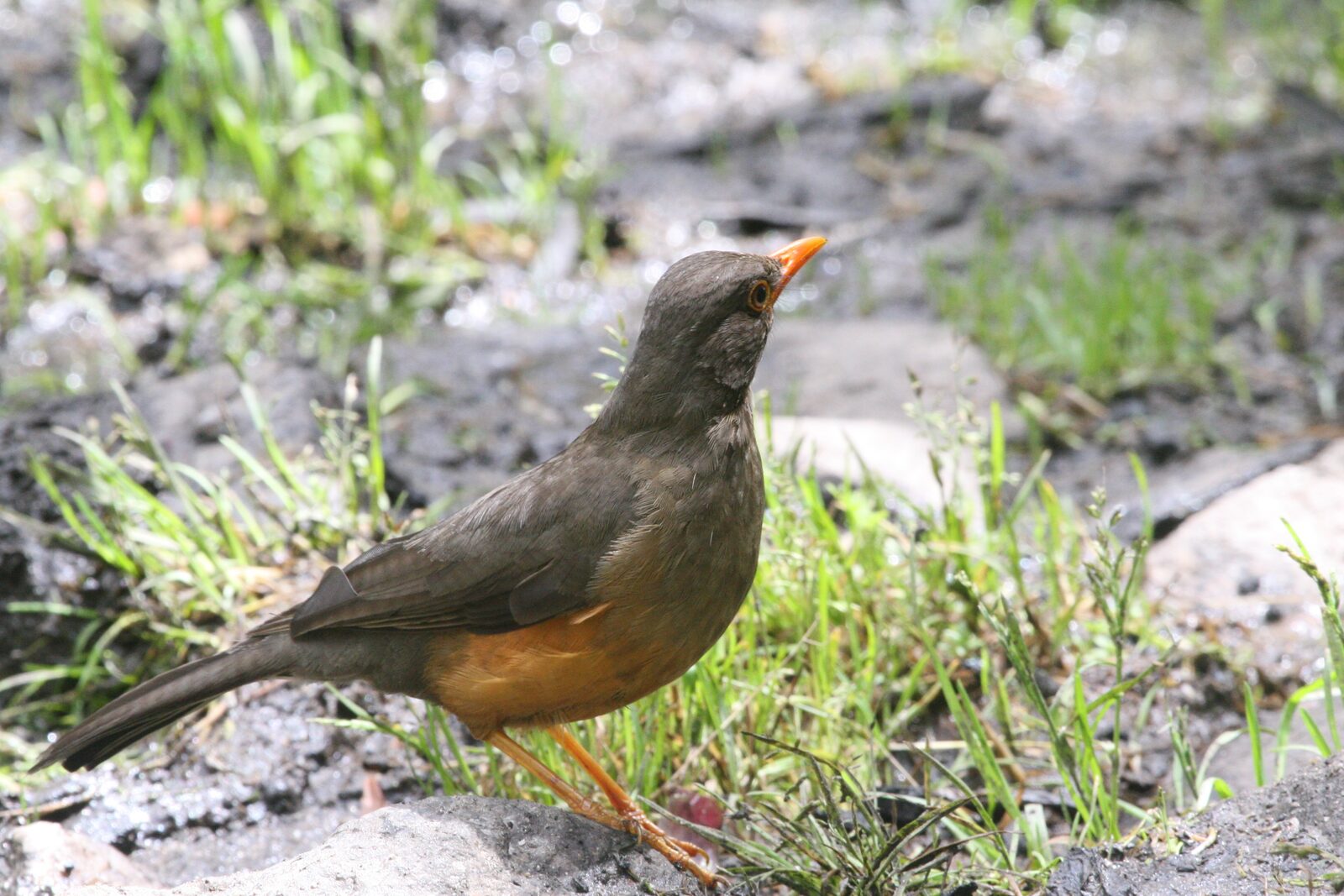
Typically dark grey-brown above with an orange bill and small orange eye-ring; the throat is whitish or grey-brown, faintly or strongly streaked black. The breast is grey-brown, and the belly and flanks a rich rufous-orange extending across the lower breast. Higher-altitude birds are generally darker.
Short, typical thrush-like phrases followed by a pause, each phrase ending with a short series of repeated subdued notes like an echo.
The most common and widespread Turdus thrush in the highlands, in a wide range of habitats including heath, forest edge, garden and cultivation, mainly above 1,600 m. In our area it is seen from 2,500 m to 4,500 m — from Sine Camp to Hunwick's along the way to Kihalo and Samalela.
Eats earthworms, with insects, invertebrates and fallen fruit supplementing its diet, including spiders, slugs and beetles.
The female mostly builds the nest — grasses, twigs, moss and roots lined with mud — usually well above the ground among climbing plants or against a trunk, laying 1–3 eggs incubated for 14–15 days.
Largely sedentary but makes some altitudinal movements in search of food or better weather. Always available around the camps in any weather, cold or warm.
Our guides know where to find it along the Kilembe Trail. Let us build a trek around the birds you most want to see.