
A skulking black bush-shrike of highland forest with a remarkable, bell-like repertoire — heard far more than seen.
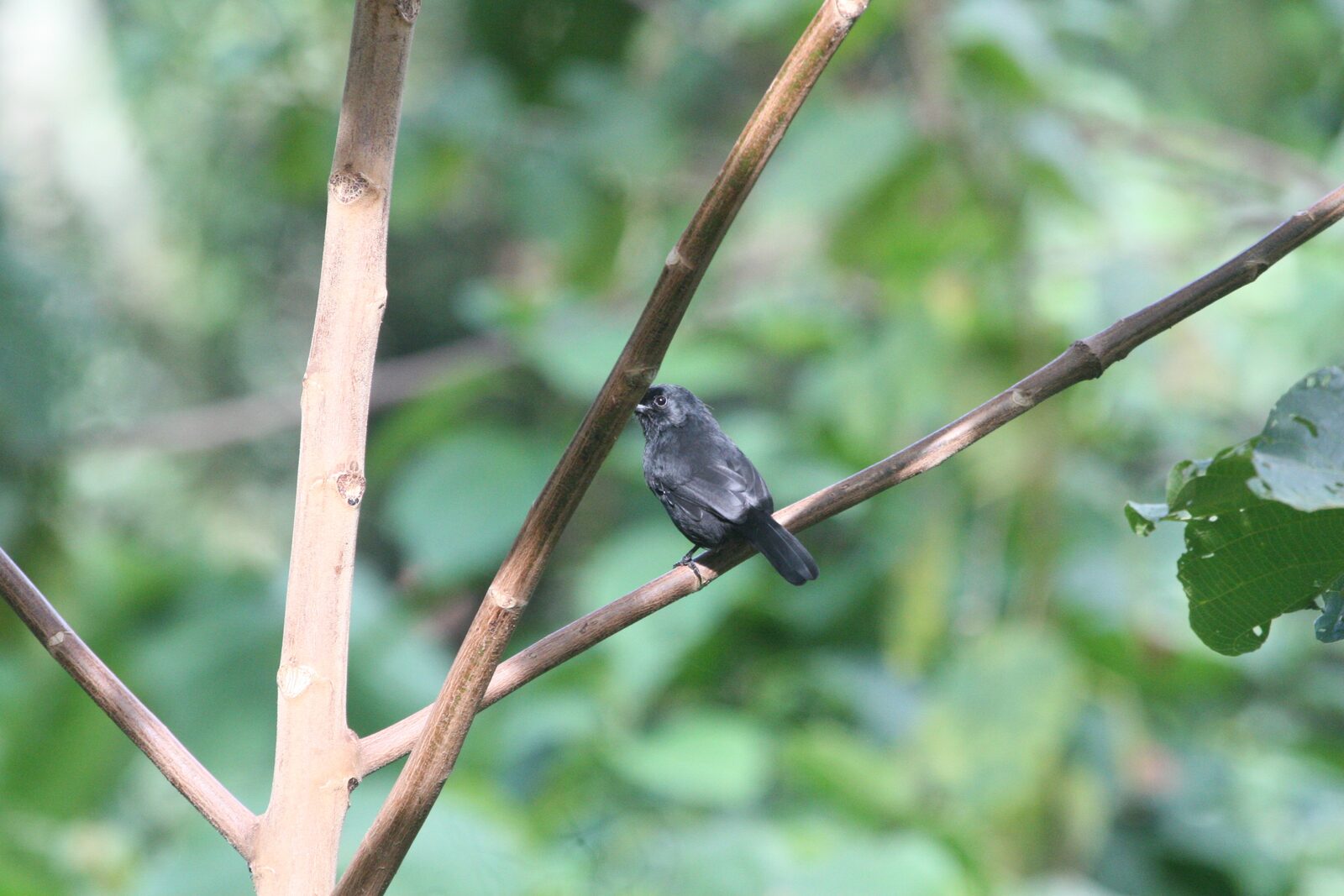
Extremely similar to Fülleborn's Black Boubou (sometimes considered the same species) but with a different call, range and immature plumage. The female and immature are slightly duller, without Fülleborn's olive-green wash.
An exceptionally wide variety of antiphonal calls and whistles, possibly unmatched by any other Laniarius — often sequences of bell notes followed by an explosive "tchank".
Common but restricted to highland forest in the west, calling frequently but hard to locate in the dense undergrowth and tangled creepers of the Albertine Rift. In the Rwenzori it is found above 2,200 m — from the lunch point on the Enock's Falls trail up to the bamboo zone above Sine Camp, above the lunch point toward Samalela, and the whole trail to Kihalo Camp at 3,490 m.
Eats various insects — beetles, grasshoppers and caterpillars — and occasionally snails, isopods and crustaceans.
Breeding is little known; the season runs November–January and March (with breeding condition October and April) in South Uganda.
A resident, heard all year along the trails, but it can make a vertical migration below its usual altitude depending on food. Not a threatened species.
Our guides know where to find it along the Kilembe Trail. Let us build a trek around the birds you most want to see.