
An elegant, long-tailed wagtail of rocky fast-flowing rivers, seen near Samalela and Cathy Waterfall.
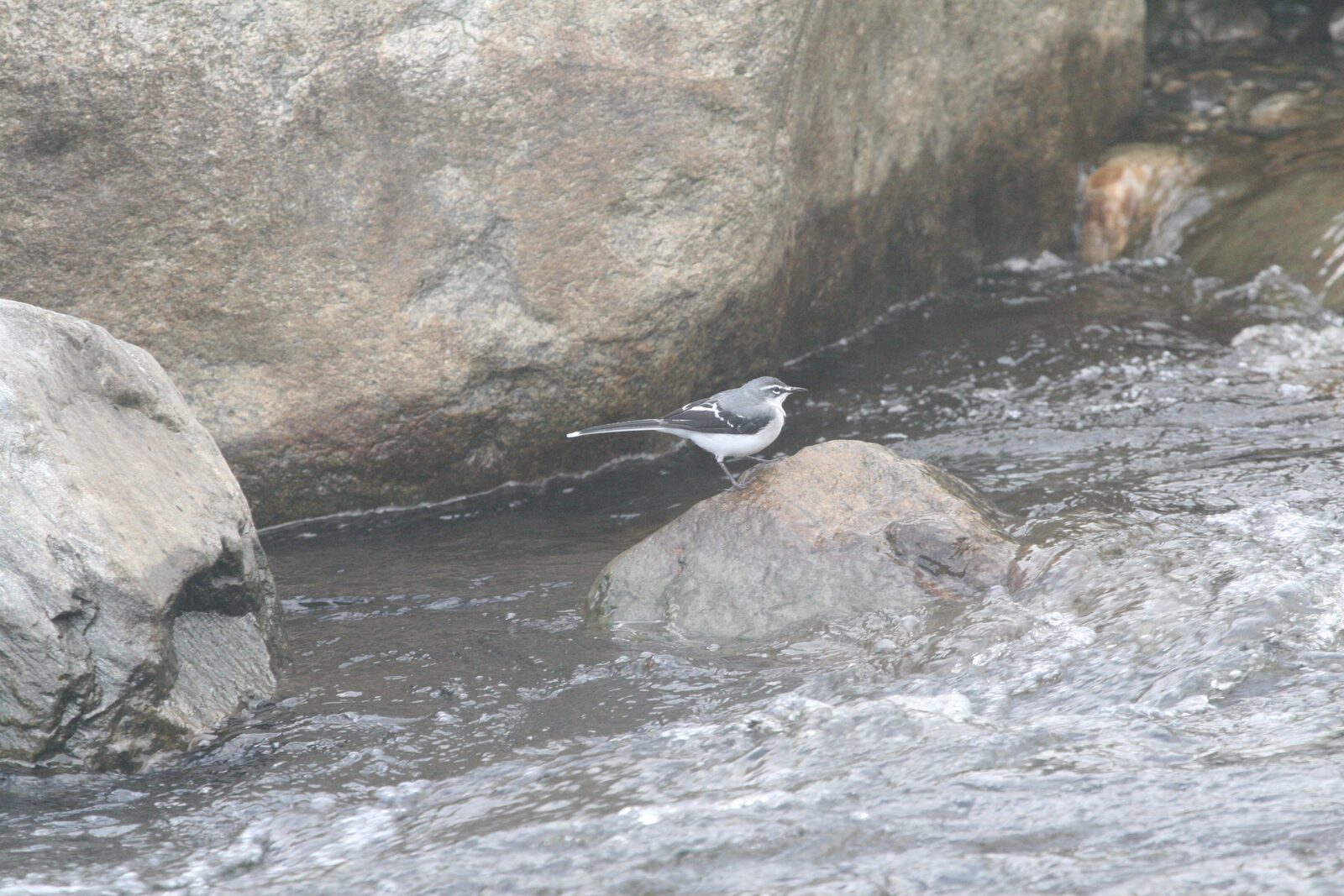
Also called the Long-tailed Wagtail — elegant and proportionately longer-tailed than other wagtails. The adult is largely clear grey above and white below with a neat, narrow black breast-band. The immature is similar but washed brown above with an indistinct breast-band.
Very vocal; a simple three-note song, "siiiii-see-uuu" (rising then falling to fade). The alarm and contact call is a strange, metallic, explosive "chit" that can break into complex whistles and buzzy descending trills.
A widespread resident of rocky fast-flowing rivers and forest edges, most common in the highlands but occurring down to 500 m. In our area it is seen along the rivers in the Rwenzori, most commonly at small streams near Samalela and the Cathy Waterfall river, on the way to the Nyamwamba as it exits the Park.
Feeds mainly on insects near fast-flowing water — flies, especially midges and black-flies — and can also take nymphs found near the rivers.
Breeds January–April and September–November (all months in Tanzania).
Found along the rivers and streams, but can shift and change area as a nomadic species. In our area seen mainly May–August and January–March (dry season); not present all year owing to its nomadic habits.
Our guides know where to find it along the Kilembe Trail. Let us build a trek around the birds you most want to see.