
An Albertine Rift endemic warbler of highland undergrowth — heard all along the trails but hard to spot.
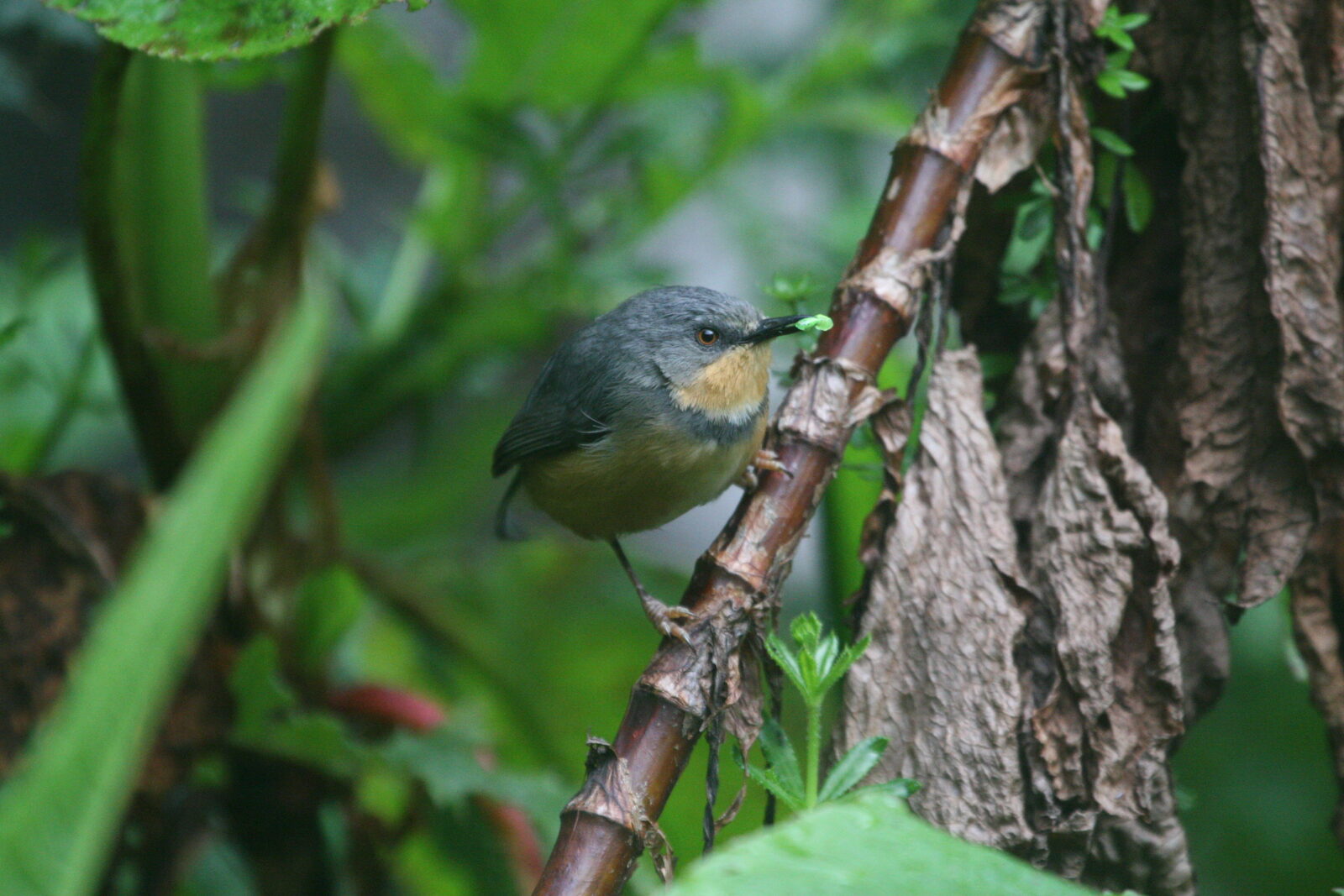
Like a washed-out Black-collared Apalis without white in the tail. The chestnut below is more extensive and much paler, covering the chin, throat, sides of the breast, flanks and vent. The breast-band is dark-grey, paler and less distinct on the female and immature.
Very similar to the Black-collared Apalis and virtually indistinguishable in song, though possibly less nasal.
An Albertine Rift endemic, common in pairs and family groups in the undergrowth of highland forests in western Uganda, Rwanda and Burundi from 1,550 m to 3,100 m. In the Rwenzori it is seen in open woodland and the open understorey layer, in bushes made by climbing lianas.
Feeds on insects, caterpillars, worms and small beetles found in the undergrowth and middle level of vegetation.
Nests mostly in the rain season (April–August north of the Equator, mainly October–February otherwise), building in covered areas to protect the young.
A resident, moving through the undergrowth in short hops and flights from bush to bush. Hard to sight but heard all along the trails — seen all season from the riverside to Kihalo Camp and the Kihalo–Samalela zone.
Our guides know where to find it along the Kilembe Trail. Let us build a trek around the birds you most want to see.