
A glossy violet-blue-black starling of highland forests and moorlands, nesting behind waterfalls to avoid predators.
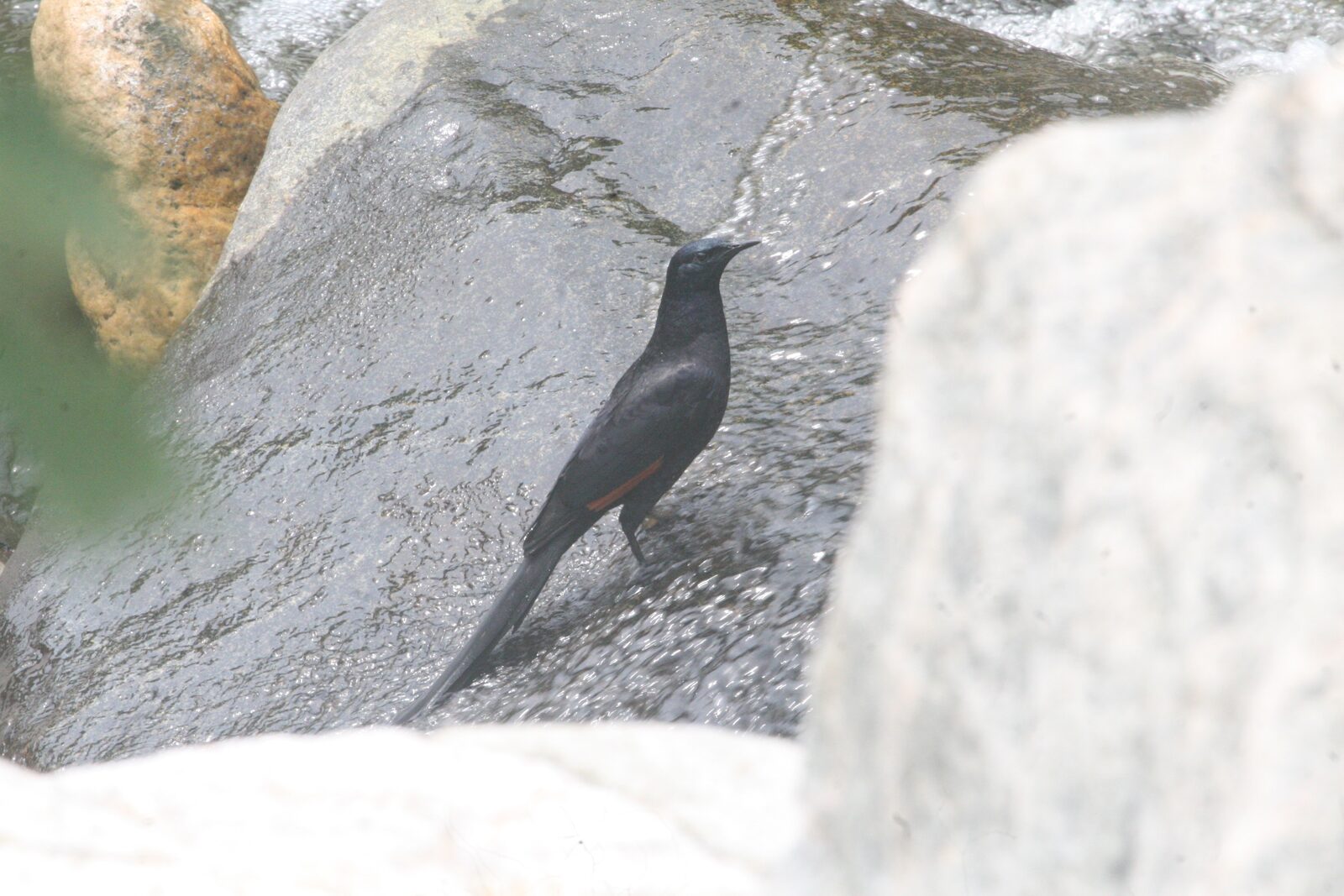
Similar to the Red-winged Starling but slimmer, with a well-graduated tail and more slender bill. The adult male is a deep violet-blue-black gloss; the female is duller, with grey on the head and breast.
Perched flocks give a loud but rather tuneless warble that can continue for long periods. In flight, members call harsh slurred notes, "teeeo" or "teeoo".
Small flocks are locally common around highland forests and alpine moorlands but range widely from 1,400 m to 4,500 m. In our area they are seen all around the Park, but commonly in the highlands from Sine Camp up to Margaretha Camp, Wiseman and Kihalo.
Eats fruit, grains, seeds, insects, locusts, ground beetles, grasshoppers, crickets, moths and butterflies, and also invertebrates and berries.
Nests in rock under waterfalls to avoid predators, laying 3–4 eggs that hatch after 11–13 days of shared incubation (though only the female stays on the nest at night). Breeding is mostly February to early July.
Presumed mostly resident, with extensive altitudinal movements and some local wandering. In the community, farmers read the flocks' seasonal movements as a sign of the farming calendar.
Our guides know where to find it along the Kilembe Trail. Let us build a trek around the birds you most want to see.