
A rufous-brown warbler of thick undergrowth and bracken — easier to hear than to see along the trails.
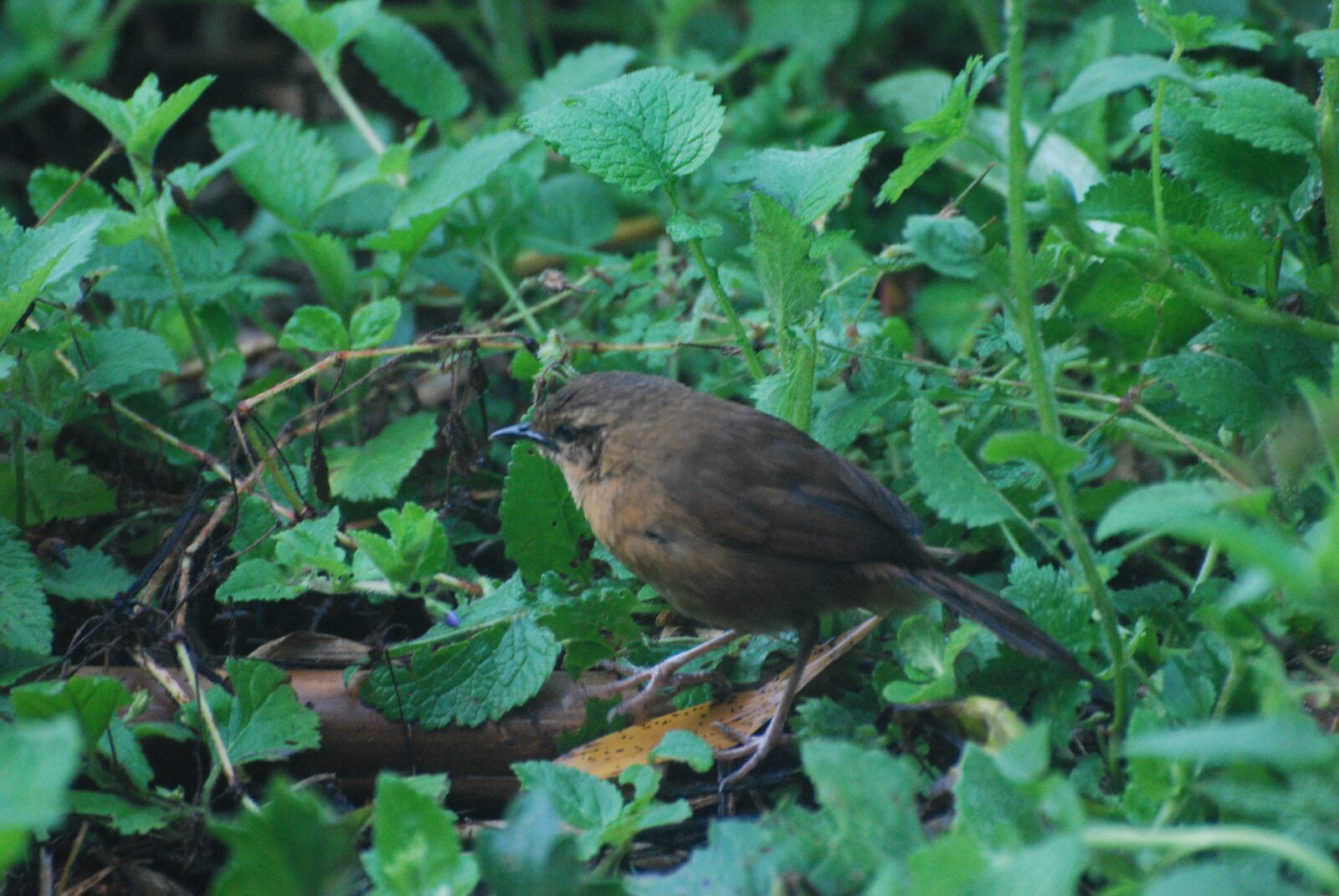
The widespread nominate and the similar western race mildbraedii are uniform rufous-brown or dark-brown above with a long buffy supercilium, and a warm rufous band across the breast and flanks.
Varies a little locally, but the typical loud song is an introductory "wii" followed by 3–6 identical explosive spitted notes. The call is a nasal "pink".
Common in undergrowth, at forest edges and in bracken, mainly over 1,000 m (often above 2,000 m). It creeps around in thick cover and is usually located by its loud song. Where they occur together, the Evergreen Forest Warbler keeps to the forest interior while this species is at the edge.
Feeds on seeds, insects and small reptiles.
Can breed in different seasons, but mainly April–May, when a pair builds a nest in foliage near the ground and lays 2–3 eggs. Eggs hatch in 13–15 days and chicks stay with the parents for two months.
Not a migrant — a resident in its habitat. A shy bird, not easy to see, mostly using thick lower bushes; very easy to hear at any time along our Kilembe trails.
Our guides know where to find it along the Kilembe Trail. Let us build a trek around the birds you most want to see.