
A spectacular alpine sunbird with scarlet pectoral tufts and extremely long tail feathers, of the high moorlands.
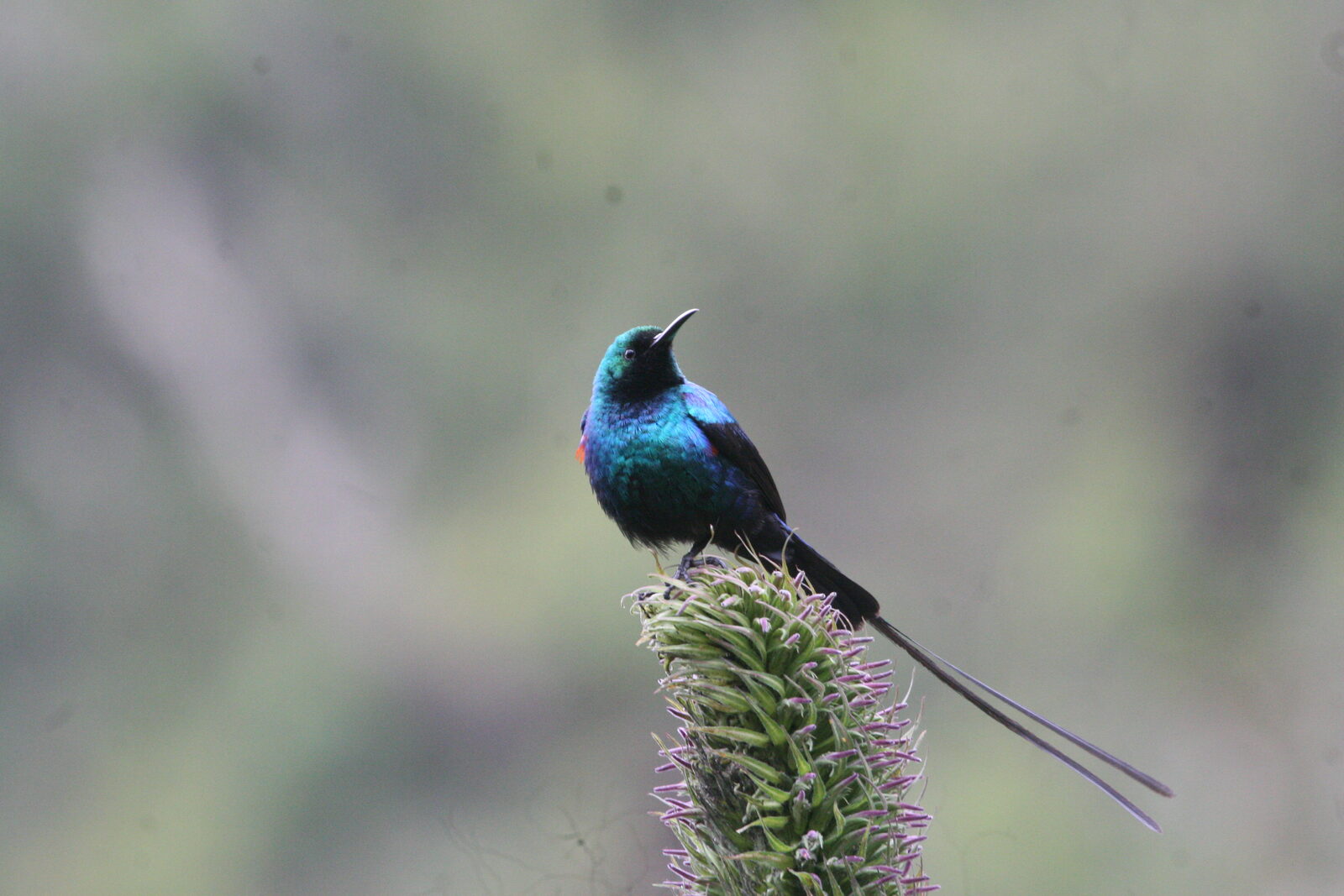
A big sunbird, iridescent dark-green with scarlet pectoral tufts and extremely long central tail feathers. The non-breeding male is mainly dusky-brown with some green on the wing-coverts, the tail always long. The female is like the immature but with pectoral tufts, brown above and paler-brown below.
A variety of harsh calls, including an arresting loud, slow, wooden-sounding rattle. The song is a rasping "shree-t-shree-shreeeh-sheee" with two loud notes.
Mainly restricted to alpine moorland, common from 3,000 m to 4,500 m among Senecio and Lobelia (such as gibberoa and mildbraedii). In our area we see it from 3,480 m (Mutinda Camp and Kihalo) up to Hunwick's Camp at 4,500 m.
Feeds from Senecio, Lobelia mildbraedii and Hypericum revolutum flowers, and can also eat butterflies, flying ants and grasshoppers at the start of the rains.
Breeds April–June and November–January. It nests in different plants — at Kihalo in branches of Myrsine melanophloeos and Hypericum revolutum, and along the way to Hunwick's Camp inside the thick dead leaves of Senecio.
Does not travel far while feeding or nesting, shifting within a small range in short flights. Seen all year in its 3,480–4,500 m range, and sometimes lower on a vertical migration when food is abundant.
Our guides know where to find it along the Kilembe Trail. Let us build a trek around the birds you most want to see.