
A canopy starling, dark blue-black above with tawny-apricot flanks, often perched on exposed dead branches.
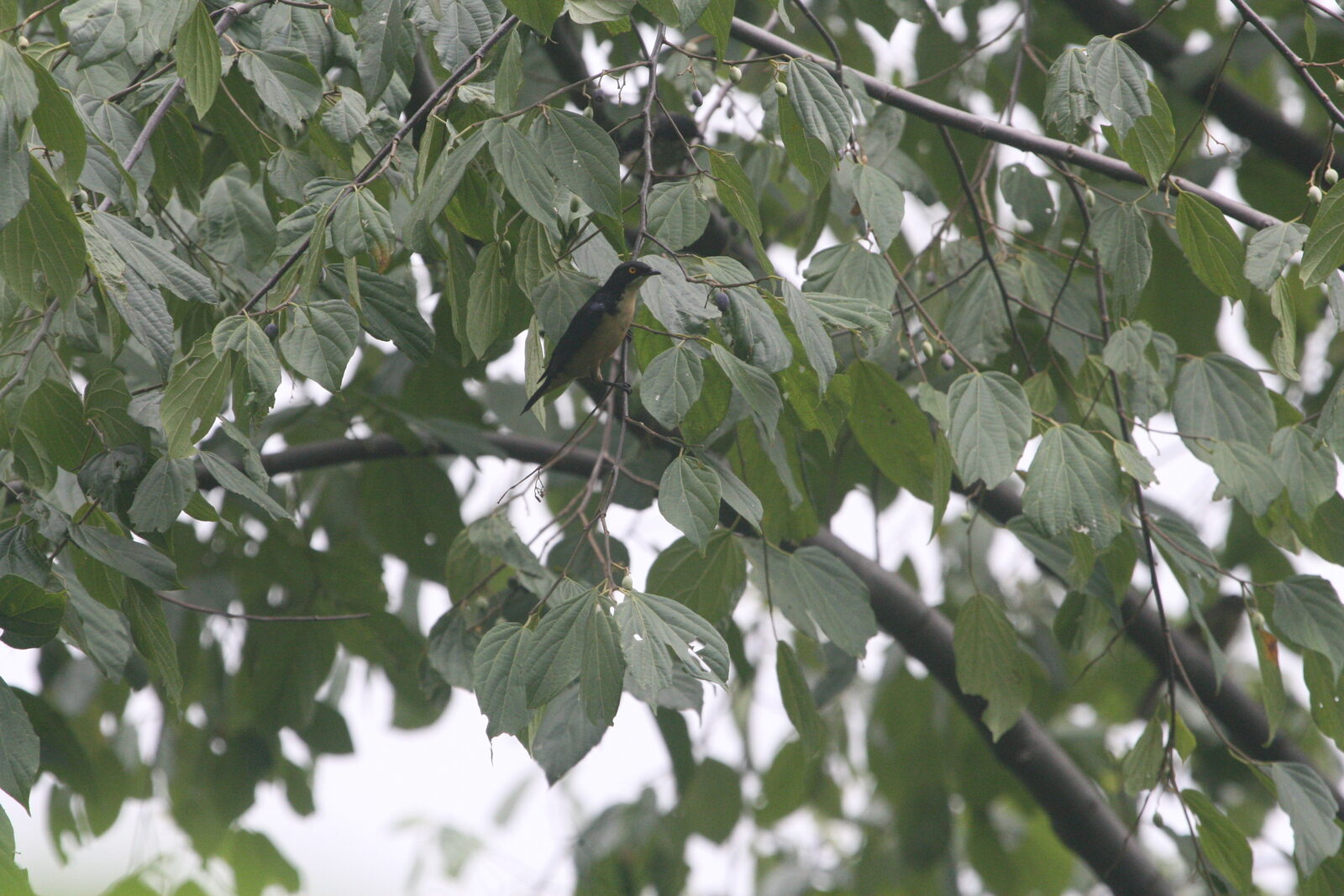
The adult is dark blue-black above with a white throat and upper breast merging into tawny-apricot on the flanks and belly; the eyes are creamy-yellow. The immature is duller above and dark-eyed.
An extraordinary refrain of very high, bell-like rising and falling notes. Flight-calls include a high-pitched "spink" and "chin'k".
Pairs or small flocks, generally uncommon in the canopy of mountain forests from 1,400 m to 3,000 m, often on exposed dead branches. Along the Kilembe trail it is seen from 1,730 m up to 3,500 m — from 500 m past the Rangers Post to the end of the bamboo zone around Kalalama, Samalira and Kihalo camps.
Its long, pointy, soft beak is perfect for invertebrates — insects, spiders, worms, snails and caterpillars. It also eats fruit, grains and small seeds.
Nests in dead tree trunks, mostly in March–April, laying 4–6 glossy pale-blue eggs incubated by both sexes over 11–13 days.
Presumed resident, but can be absent for a while — sometimes 2–3 months — returning during the forest's fruiting season. Plays an important role in seed dispersal.
Our guides know where to find it along the Kilembe Trail. Let us build a trek around the birds you most want to see.