
A warm-brown leaf-warbler of open highland woodland, best seen in the dry breeding season along the trails.
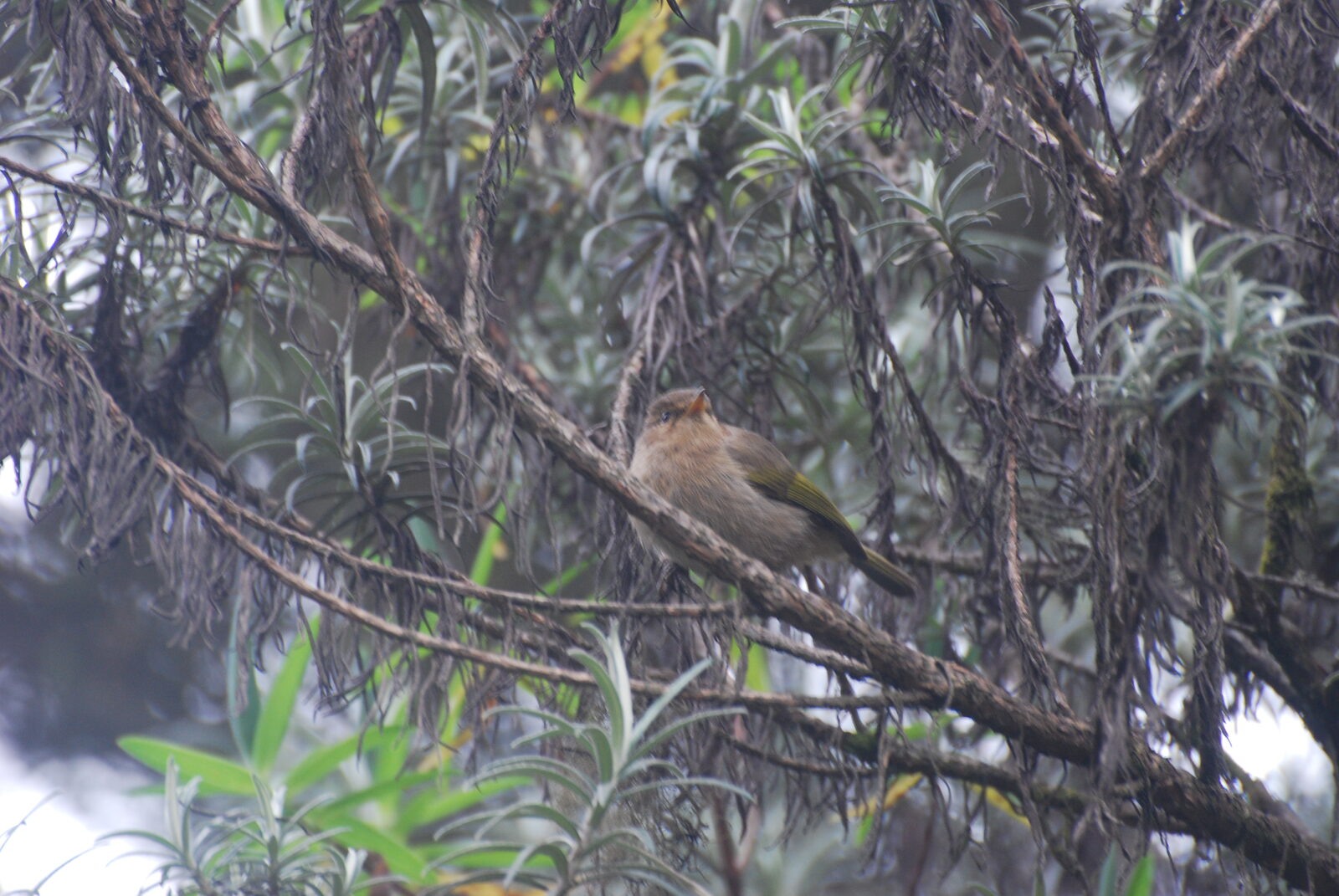
Much browner than other leaf-warblers, with the wings and tail edged green. The widespread race mackenzianus is warm-brown above with a long buffy supercilium and a dark eye-line.
A variable, complex song of sweet, sewing notes followed by trills, with very brief pauses between phrases.
Common in many highland forests above 1,500 m; in our area it is found above 2,200 m in open woodland and short bushes, sometimes using Myrsine trees to look for insects in the moss.
Mostly eats insects found on the trunks and limbs of trees — small beetles, caterpillars, bugs, larvae and insect egg masses.
Nests in the vertical fork of a bush or small tree; in our area it uses Myrsine melanophloeos and various Rubus. The basket-like nest of moss and lichen is usually within 50 cm of the ground and holds 1–7 eggs.
Does not travel far, moving from tree to tree within its range. Seen in all seasons along the Kilembe trails, but best sighted in the dry breeding season.
Our guides know where to find it along the Kilembe Trail. Let us build a trek around the birds you most want to see.