
A high-altitude endemic sunbird of the heath zone, feeding among Mimulopsis and Pycnostachys flowers above the bamboo.
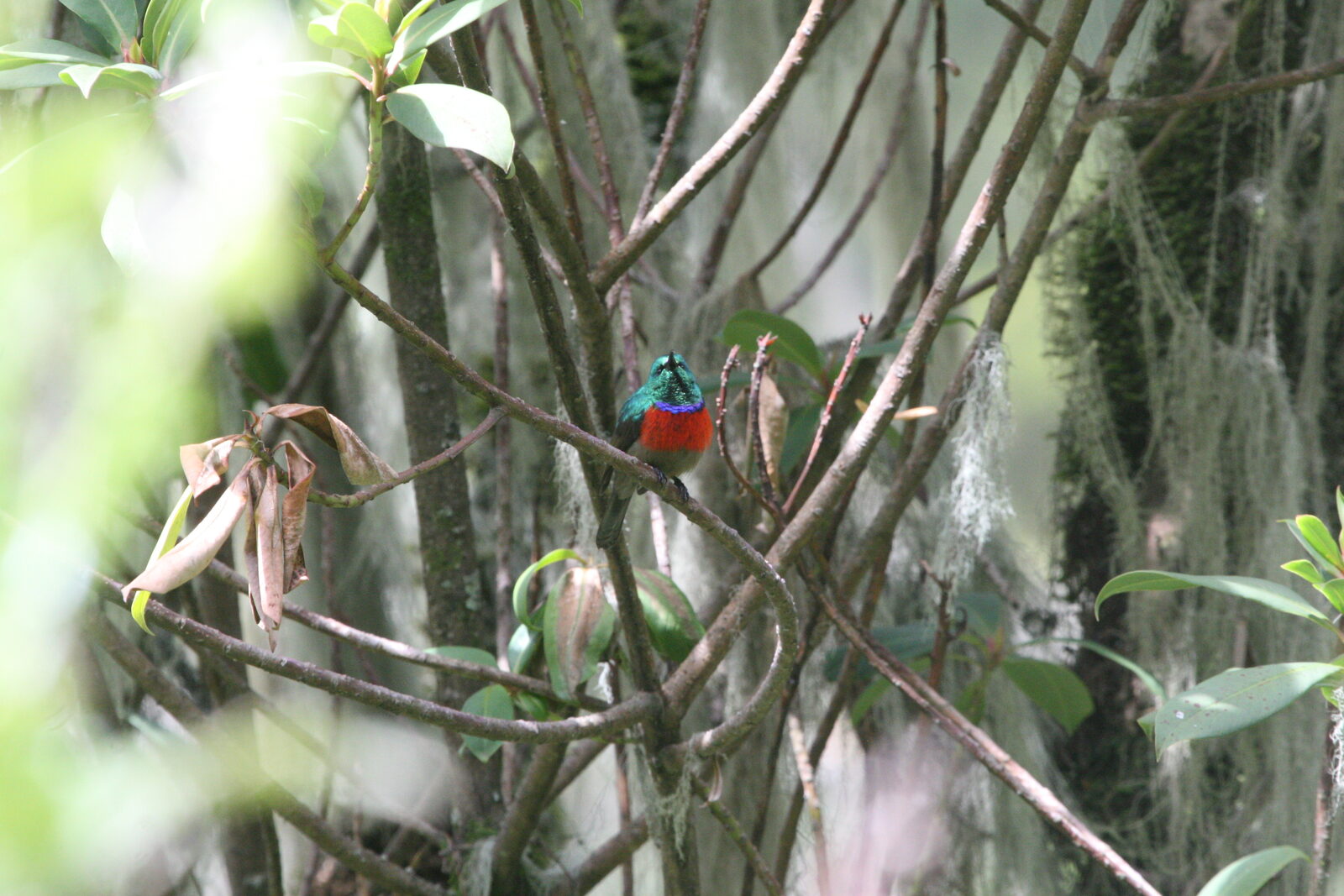
Similar to the Northern Double-collared Sunbird but larger. In the Rwenzori the nominate males are the longest-billed, with an olive belly. Females are best separated from the Northern Double-collared Sunbird by their larger size and longer bills.
The common call is two notes, "si-siii", the second higher — a song recorded in our area.
An endemic of the isolated high mountains around the Albertine Rift, locally common above 2,000 m at forest edges and in flowering heath. On the Kilembe trails it is found from 3,000 m, above the bamboo, in heath dominated by the scrub Mimulopsis and by Pycnostachys meyeri and goetzenii flowers.
Like most sunbirds it feeds on nectar and can also eat insects and spiders. In our area it feeds from the flowers of Pycnostachys meyeri and goetzenii in open woodland at 3,000 m, from Kalalama to Samalira and Kihalo.
Nesting and breeding are as for other sunbirds — in the Rwenzori, November, December and January — nesting at the middle (and sometimes higher) levels of plants.
Uses its range to move between feeding areas and plants. Not seen in the community, but makes a vertical migration between 2,000 m and 3,500 m. Seen throughout the year along the Kilembe trails.
Our guides know where to find it along the Kilembe Trail. Let us build a trek around the birds you most want to see.