
A dark-grey-and-red finch of the montane forest floor — an Albertine Rift endemic, tricky to see but often heard.
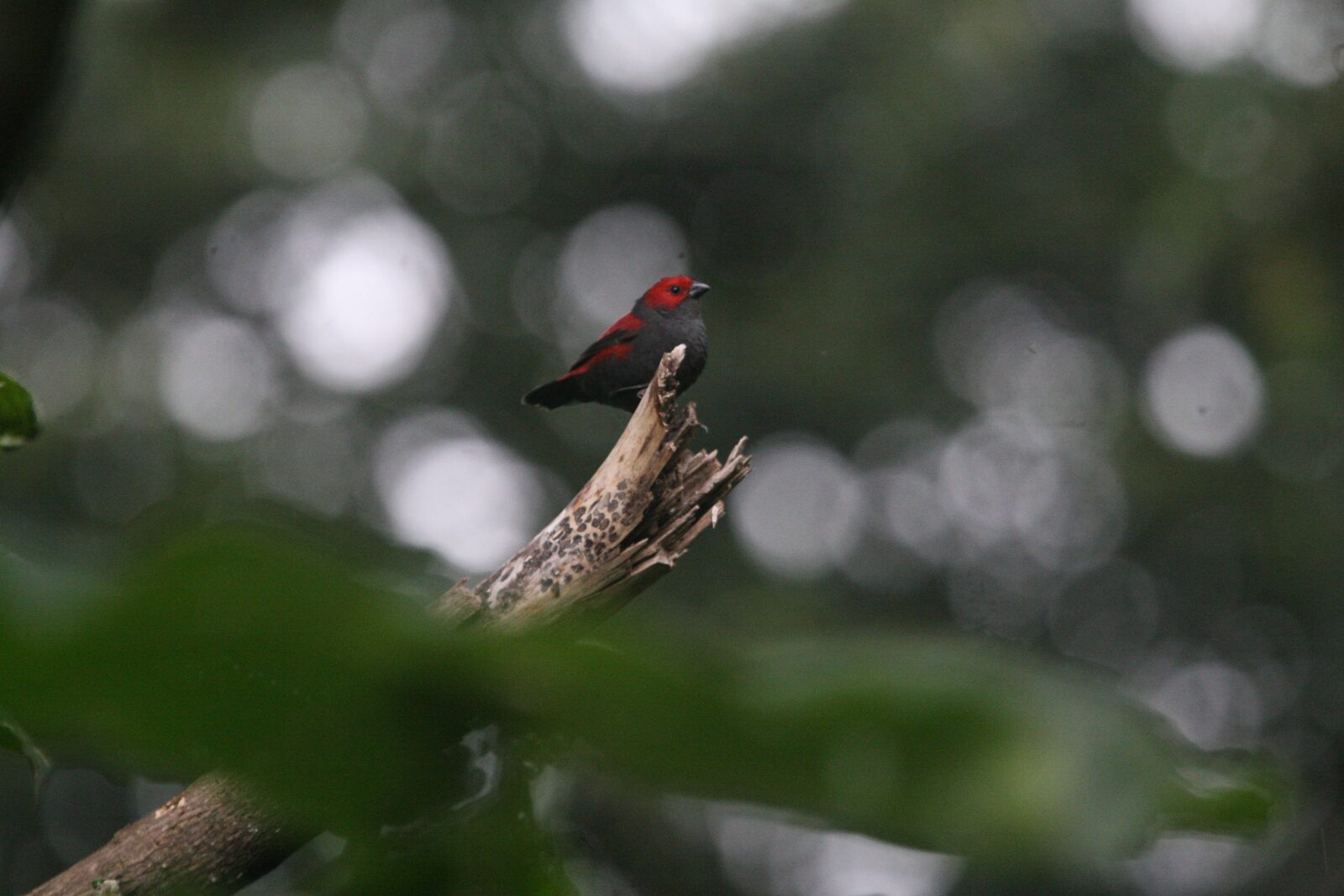
Dark-grey and red plumage distinguishes it from all other crimsonwings. The female is like the male but with a smaller red area on the head; the immature is mostly dark-grey with a variable amount of dull red on the mantle and rump.
Rather explosive "tsi-tsii" calls, more hissed than the Red-faced Crimsonwing and similar to the Dusky Twinspot.
An endemic, locally uncommon in montane forest along the Albertine Rift from 1,550 m to 2,700 m, and 1,725 m to 2,800 m in the Rwenzori Mountains National Park / Kilembe trails — from the Rangers Post (entrance gate) to the Riverside trail towards Samalira and Kihalo.
Feeds on seeds along cleared trail edges, on a grass called Coelachne africana, and on small insects such as little beetles and snails on the forest floor.
Breeds in the dry season (late May to September), when males carry nesting material to build in the undergrowth (bracken) and under thick, mid-level bushes.
Not globally threatened, but lives within a restricted range in the Albertine Rift mountains and keeps to a small area. Hard to observe but present all year — often heard when passing through its range.
Our guides know where to find it along the Kilembe Trail. Let us build a trek around the birds you most want to see.