A slate-blue, green and bright-yellow robin of the forest undergrowth, seen all year around our Kilembe trails.
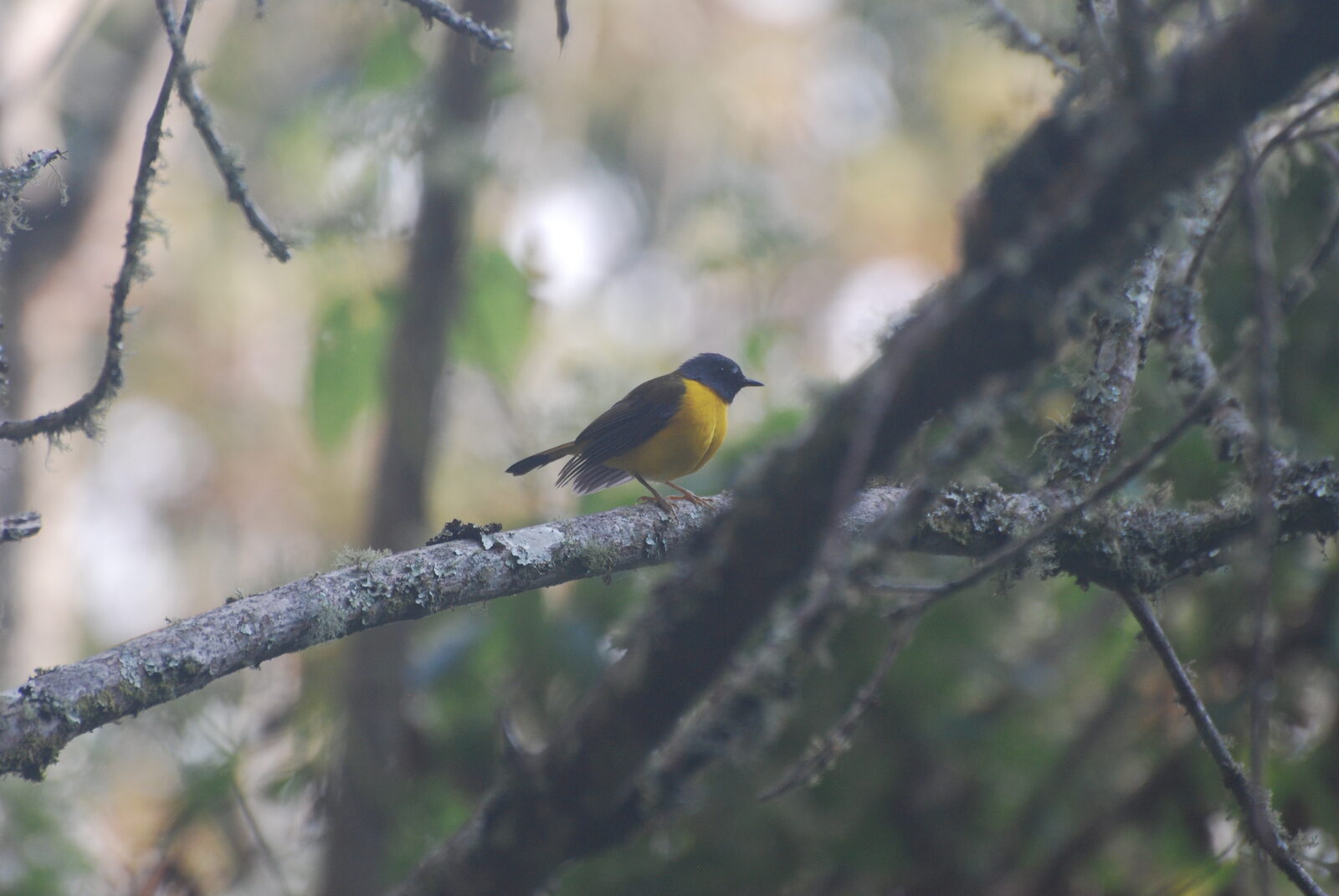
Also called the Starred Robin. Typically slate-blue head, green back and bright-yellow underparts; the tail is yellow with black central feathers and a terminal band. A white spot in front of the eye and on the breast is often concealed. The immature is olive-green above and dull yellow below.
The voice varies and often mimics other sounds, but a strong song is typically six whistled notes rising then falling. The call is a see-saw piping "pi-pi-pi-pi".
Common but rather shy, inhabiting forest undergrowth. In the Rwenzori it is seen from 1,860 m to 2,600 m — from the suspended wire bridge and Musengye rock shelter up to the bamboo zone above Sine Camp, and toward the Riverside Lunch Spot.
Its diet is mostly insects, though some fruit is eaten as well.
A territorial, seasonal breeder that lays up to three eggs in a domed nest.
Seen all around our Kilembe trails the whole year, particularly at the cleared edges of trails, on the ground and in the middle level of vegetation.
Our guides know where to find it along the Kilembe Trail. Let us build a trek around the birds you most want to see.